

The exciting history of the pewter bracelet

Finds of tin wire work have been made from around the 11th century AD in Gråträsk, Piteå Municipality. Tin thread embroidery is an old Sami craft for decorating clothing and cleaning cloths. In other parts of the world have wire of gold. silver, copper and bronze were used to decorate clothing, however, it was only in the Nordics that tin wire art was used.
The tin wire was made by melting the tin and then pulling the tin wire through horns with holes in it, from coarser to thinner, the spun tin wire is spun with a small dragonfly around another wire, the women who were most skilled in tin wire making and embroidery were highly regarded. Today, ready-made tin wire is available for purchase.
Between 1850 and 1900, tin wire embroidery largely disappeared entirely as a result of the Laestadian the revival movement, which "condemned" such clothing. The tin wire craft was revived at the beginning of the 20th century especially through Andreas Wilks (1884-1953) from Dikanäs. Andreas was an important person in the Sami tin wire craft. When at the beginning of the 20th century he "resurrected" the art of making and embroidering with tin thread. In 1905, Andreas found his mother's old tin wire tool and began to experiment. In the end, he managed to both pull and spin tin wire. Andreas led countless courses throughout the Sami area during the years 1925–1951. His wife Syrene also became a skilled tin wire craftsman, as did Andreas Wilk's brother Lars and his wife Sanna (Syrene's sister). The knowledge of the tin wire craft was spread again and resumed and is today again a developed art craft among the Sami.
In the 1970s, there was great interest in handicrafts in Sweden and the educational associations had very good finances. Some Sami craftsmen held courses and the tin wire technique spread outside the Sami culture. It was also around this time that bracelets with pewter embroidery began to be made; previously, pewter embroidery was mostly found on bodices, belts and reindeer seldon.
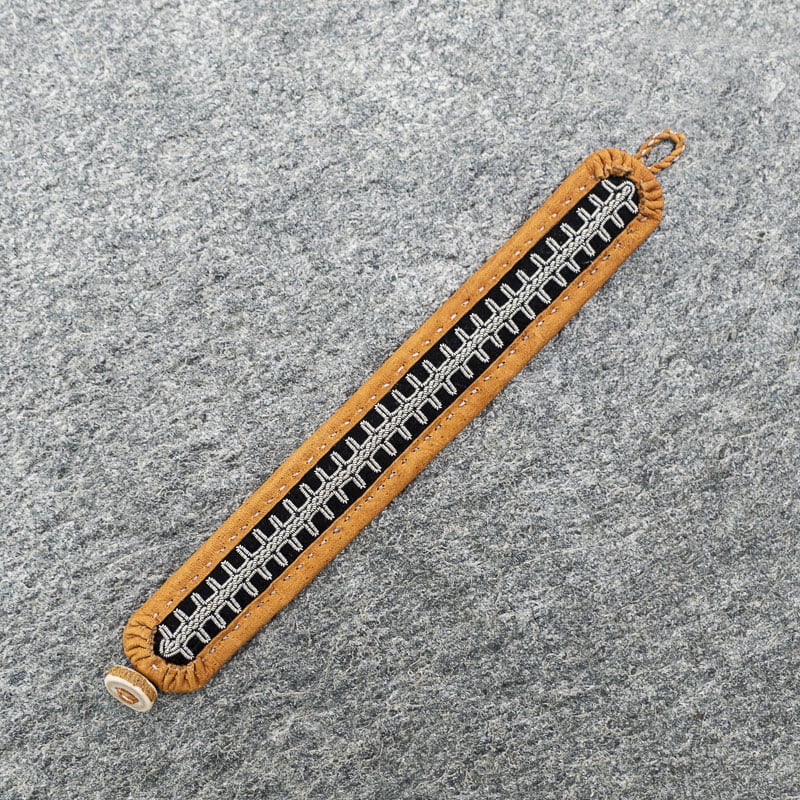
A traditional Sami pewter bracelet is made of hand-tanned reindeer skin and with tin wire embroidery.
De flesta tennarmband idag utanför den samiska kulturen görs av maskinellt garvade renskinn, garvningsmetoderna varierar mellan vegetabiliskt garvat och kromgarvat. Armbanden har flätor av tenntråd som limmas och sys fast.
I vår webbshop finns främst tennarmband med tenntrådsflätor på vegetabiliskt garvat renskinn av icke samiska slöjdare, stundtals finns även embroidered pewter bracelets på handgarvat renskinn av samiska slöjdare. Ett broderat tennarmband på handgarvat renskinn tar åtskilliga fler timmar att göra än ett tennarmband med tenntrådsflätor på maskinellt garvat renskinn. Bilden nedan är ett exempel på ett broderat tennarmband på handgarvat renskinn. Tennarmbandet Ursus på bilden ovan är ett exempel på tennarmband med tenntrådsflätor som erbjuds i vår webbshop.
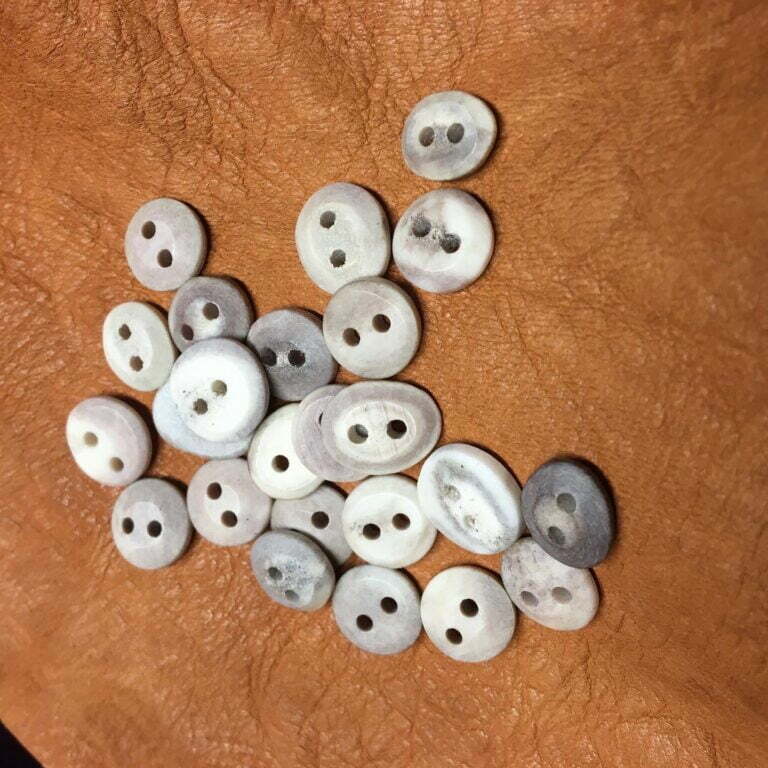



 Wooden box with handle - approx. 1.1 dl
  Seat cushion in Reindeer Skin
  Special - Flytt av knapp
  Tin whiskey cups, gift set
  Ceramic pendant - Light bulb no. 2
  Wooden cup with a hole for the finger - approx. 1.1 dl
  Bricka Lappland rund diameter 45 cm
  Ceramic pendant - Light bulb 1
 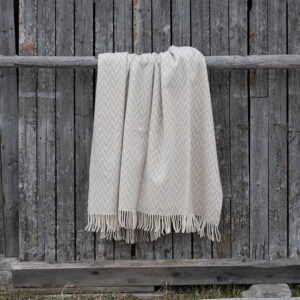 Wool blanket - Ax
  Cap opener in forged leaves
  Ceramic pendant - Light bulb no. 3
  Tulip vase in glass - Purple
  Lapland tray
  Bara Bada Sauna mug - Wooden mug with hand engraving - Limited edition
  ICE - Tin wire necklace
  Leaves - Window Hanging Yellow, 24 cm
  Wooden Coffee Measure
  Hook in forged leaves
  LAPONIA - baby blanket in organic wool
  Ripa - Ceramic sculpture, the larger model
  Forged cap opener
  Leaves - Window pendant Grey, 21 cm.
  Leaves - Window Hanging Grey, 20 cm
 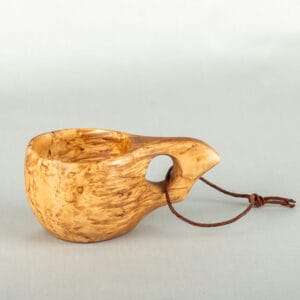 Kuksa for Chilldren about 1 dl
 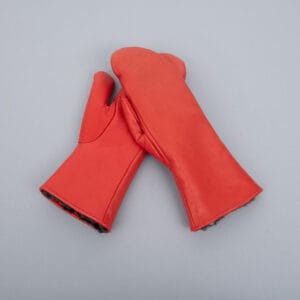 Leather gloves with lambskin lining, red, size 6.5 - Slim and long model
  Home-knitted socks - Wool sock, turquoise with wave patterned shaft size 30
  Knitted wool hat - unisex model - size approx. 57
 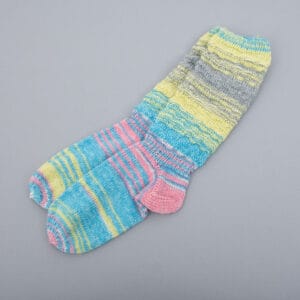 Home-knitted socks - Thinner sock with longer shaft, size 33
  Luleå - mold in ceramic
  Home-knitted mittens in gray and white with a snowflake pattern
  Home-knitted black mittens with embroidery
  Paper knife of the reindeer's tibia
  Heart-shaped - Small ceramic dish
